
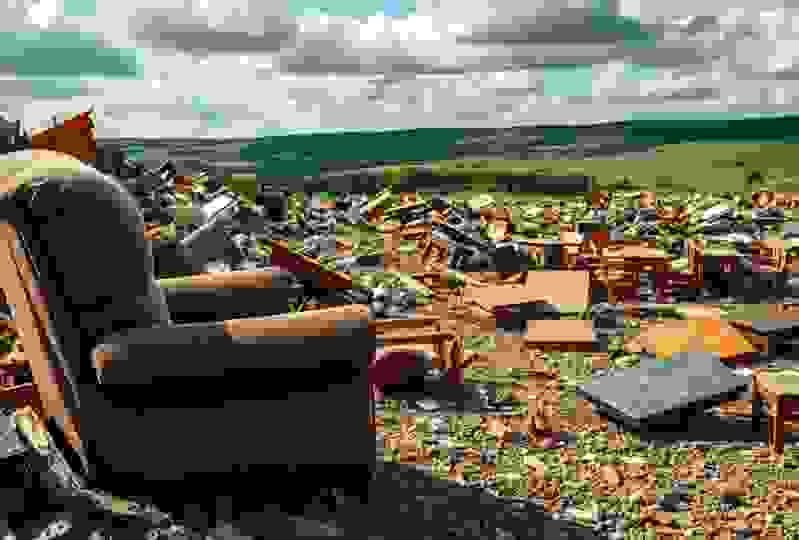
Millions of items are discarded each year in the UK, and this is not just about worn chairs or tired sofas. Over 22 million pieces are thrown away annually, and around 670,000 tonnes are discarded, making up roughly 42% of bulky household waste.

The core problem is systemic: usable goods still become refuse because disposal feels easier than finding an alternative. Only about 17% is recycled, which shows how limited current routes are and why change matters.
This guide explains the scale, who is affected and practical options beyond burying items. We briefly note why large items dominate bulky collections and the wider environmental impact — greater landfill pressure, low recycling rates and avoidable emissions.
Later sections will cover the main drivers: convenience, failed resale, transport limits, time pressures, fast furniture and low awareness of other choices. The article uses recent UK data up to 2025 to keep the information current and actionable.
Key Takeaways
- Millions of pieces and hundreds of thousands of tonnes are discarded each year in the UK.
- Low recycling rates mean many usable items still become refuse.
- Bulky collections are dominated by large household items, so reform is vital.
- Simple drivers—convenience and time—push disposals towards landfill.
- The guide uses 2025 UK data to offer practical, current alternatives.
The scale of the problem in the UK right now
Across the UK, homes replace large household items at a rate that quickly adds up to millions of discarded pieces each year. North London Waste Authority estimates about 22 million pieces are thrown away annually. That equals dozens of items from a single town every day.
Bulky streams are heavy. WRAP reports roughly 1.6 million tonnes of bulky household waste each year, and about 42% of that is furniture — around 670,000 tonnes. That level makes furniture a major component of bulky collections rather than a small part.
Collection challenges make standard bins a poor fit for large items. Size, transport logistics and booking systems push many households to the tip or bulky collections. These barriers increase the chance an item ends up discarded, even when repair or reuse would be possible.
Survey data (Feb 2025, n=2,001) shows replacement patterns that explain why volumes stay high. About 3.25% replace items monthly, 9.2% once a year, 21.84% every 2–4 years and 24.54% every 6–10 years. Roughly a quarter of adults replace at least one piece each year.
| Metric | Value | Why it matters |
|---|---|---|
| Pieces discarded | 22 million | High item count equals steady disposal demand |
| Tonnes in bulky stream | ~670,000 tonnes | Large mass strains collection and reuse systems |
| Replacement rate (annual or faster) | ~25% of adults | Frequent turnover multiplies across millions of households |
Overall, this is as much a system capacity issue as a behaviour issue. High discard rates are not only about broken items; many usable pieces are binned because moving, selling or donating feels harder. The next section looks at why usable goods often get tossed rather than reused.
Why furniture landfill waste happens even when items are still usable
Many perfectly usable pieces still end up discarded because the simplest route feels quickest. An item can be in good condition yet become a task householders decide to get rid of rather than solve.
Failed resale: no buyers
In the 2025 survey, 17% said “no buyers” was the reason they threw out a good piece. Low demand, high price expectations and slow replies turn viable items into disposal risks. Nottingham showed the highest “no buyers” rate at 24%.
Transport barriers
Sixteen per cent lacked the means to move large pieces. Many people have no van, no strong help to lift, or cannot dismantle a sofa or wardrobe. For 28% of respondents in Edinburgh, the tip became the default.
Time, hassle and short deadlines
Another 16% said it was too much hassle. Busy lives, work and childcare mean time wins over doing the extra legwork. Brighton stood out where urgent moves (17%) forced quick disposal decisions.
| Reason | UK % | Notable city |
|---|---|---|
| Failed resale / no buyers | 17% | Nottingham (24%) |
| Transport or moving limits | 16% | Edinburgh (28%) |
| Too much hassle / time | 16% | Brighton (urgent moves 17%) |
| Low awareness of options | — | Varies by council |
Fast furniture and falling durability: when “cheap” becomes costly
Buying cheap, trend-led pieces has changed how long items stay in our homes. Mass-produced options aim for quick purchase rather than long service. Many last around 5–7 years, so replacement becomes routine.

Trend-led buying and disposable goods
“Fast” describes style-driven, low-cost items made to be replaced. They meet a trend and then are often swapped for the next look. This behaviour raises turnover and shortens useful life.
Short lifespans and low quality
Lower quality frames, thin fabrics and cheap composites break sooner. Poor quality accelerates replacement and increases the number of years a household buys another piece.
Why repair is overlooked
Less than 1 in 10 people consider repair, says North London Waste Authority. Skills, local services and perceived cost put repair off. Often, people feel it is not worth the money or time.
| Feature | Cheap option | Durable option |
|---|---|---|
| Typical life (years) | 5–7 | 10+ |
| Materials | Mixed laminates, glued joints | Solid wood, replaceable covers |
| Hidden money cost | Frequent replacement | Repair and longer service |
Who is most likely to replace furniture frequently, and where it’s happening
A closer look at the data shows younger adults and certain cities drive the fastest turnover of household pieces.
Age patterns
People aged 16–24 and 25–34 replace items most often — roughly every 2.5 years. Those aged 35–44 change items about every 3 years. People aged 45–54 average roughly 4 years, and those 55+ about 6 years.
Monthly replacements vs every few years
About one in ten people aged 16–24 replace a piece every month. This behaviour links to rented homes, short leases, smaller spaces and trend-driven buying. Monthly churn is a small group, but it raises volumes quickly compared with the more typical cycle of a few years.
City patterns
| City | Average (years) | Interpretation |
|---|---|---|
| Leeds | 3.49 | High turnover — strong rental market and mobility |
| Nottingham | 3.51 | Urban demand and fast replacements |
| London | 3.94 | High churn but also good reuse networks |
| Plymouth | 5.22 | Lower mobility, fewer short-term lets |
| Norwich | 5.24 | Least frequent — suggests stronger reuse or longer stays |
Where you live and who you are influence how often a home cycles out a piece. Higher turnover links to rushed disposal under time pressure, so these patterns shape what ends up being discarded.
The environmental impact of sending furniture to landfill
Each bulky item removed from use drains resources and raises emissions in ways people rarely see. The scale of the problem is not only about lost goods but about long-term cost to the planet and local environment.
Low recycling rates: why only a small percentage gets recycled
Only around 17% of discarded large items in the UK are recycled. Bulky collection limits, mixed materials and contamination make sorting hard.
Dismantling sofas or pieces takes time and specialist skill. That raises costs and cuts the share that actually goes back into the circular system.
The carbon cost: new production versus refurbishing
Making new goods often uses far more carbon than fixing old ones. Estimates show new production can create up to 1000x more CO₂ than refurbishing the same item.
Reusing one tonne of sofas can deliver climate benefits similar to recycling a tonne of plastics, so extending life is an effective way to reduce emissions.
Landfill risks: materials, chemicals and long-lasting footprints
Bulky items take space and persist for decades. Many contain treatments, foams and coatings that release chemicals and complicate safe disposal.
That locks valuable materials out of use and increases the environmental cost of disposal.
| Category | Recycling rate | Carbon outcome | Main issues |
|---|---|---|---|
| Sofas (typical) | ~17% | Refurbish ≈ far lower CO₂ than new (up to 1000x) | Mixed textiles, foams, frames |
| Wood-based items | Higher if sorted | Lower carbon when reused | Contamination, hardware removal |
| Composite pieces | Low | High carbon for new production | Hard to dismantle, treated surfaces |
Much of this impact is avoidable with better reuse, repair and collection routes. The next section looks at practical alternatives to the tip that cut emissions and keep materials circulating.
Better options than the tip: reuse, repair, donate and recycle
There are clear alternatives to simply taking large items to the tip, and many start at home. Small actions can keep usable pieces moving and cut household waste from the bulky stream.
Reuse potential
In the UK about 32% of bulky streams are reusable as-is. That rises to 51% when slight repair is included. Around 110,000 tonnes at HWRCs are reusable in their current condition.
Donation and redistribution
Charities, community reuse schemes and portals such as RightGreen match items to collectors and rehoming partners. National schemes from brands like IKEA and Silentnight show how the market is changing.
Practical routes when selling fails
- Lower the price or list as free to collect.
- Offer delivery for a small fee or widen platforms.
- Use specialist reuse collectors or rework services if time is short.
| Route | When to use | Benefit |
|---|---|---|
| Donate/rehom | Good condition | Keeps items in use |
| Repair/rework | Minor damage | Extends life |
| Recycle responsibly | Not repairable | Recovers materials |
Buying and business solutions
Choose longer-life furniture: solid build, repairable parts and recycled or FSC timber. Businesses can help with take-back, scheduled collections and refurbishment services that reduce landfill and save resources. Small changes in how we get rid of items add up to big gains.
Conclusion
Small habits and service gaps combine to turn usable items into unwanted goods, making this a system problem as much as an individual issue.
In the UK roughly 22 million pieces are discarded each year and about 670,000 tonnes of furniture waste enter bulky streams. Only around 17% is recycled, so change matters now.
Common drivers are clear: no buyers, transport limits, lack of time and low awareness. These push many people toward quick disposal rather than reuse or repair.
The practical takeaway is simple: landfill is often avoidable. Try one better option next time—list an item for collection, donate or arrange a repair—and buy for longer life to save money over years.